2015-09-22

5 More Ways I Saved Money in Tokyo


The five Tokyo money saving tips in this post are related to site-seeing, food, and shopping. For advice regarding accommodations and transportation, please see the aforementioned article. 

Site-seeing

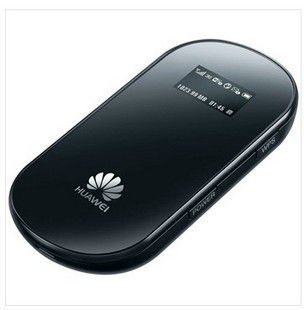
1. Rent a portable wi-fi device or prepaid SIM card

A portable wi-fi device.
Source
If you don't have a phone plan or SIM card that is usable overseas, you will definitely benefit from renting a portable wi-fi device or prepaid SIM card. Naturally, every train station in Tokyo has a detailed map of the area, and there are guide maps in most major neighborhoods; however, you do not want to rely on these when you have a long walk and need to reference a map with your location in realtime. Having stable Internet access while on the go will also allow you to track train or bus arrival times.

I went the portable wi-fi route. There are many companies to choose from when renting a device, and after reading several reviews online, I chose Japan Wireless. Admittedly, I was a little put off by their 1998-style website design, but their service was top notch, and if I ever have the need in the future, I would use them again. I requested that my device be sent to my accommodations before my arrival, so it was waiting for me my first day in Tokyo. It came with a nifty portable charger so I was able to charge the device and my phone while I was out and about. Conveniently, I simply had to place the device in a pre-addressed, prepaid envelope sent with my initial package and drop it in the mailbox at the airport in order to return it!

2015-09-19

4 Ways I Study Chinese

Yes, during language study sessions,
I sometimes have this many books open!
Source
Here's some sage advice regarding language learning:

"If you don't use it, you'll lose it."

I see you rolling your eyes, but believe me, it's true! It's why I can't speak a lick of Spanish anymore!

I do language study one to three hours a day. Sometimes more. Often it involves hitting the books, but sometimes it might be reading comics, watching a drama without subs, or listening to a radio show. 

At the moment, I'm focusing on studying two languages: Mandarin and Japanese; my skills in each language are quite far apart. 

Beginner. Intermediate-advanced. Business level. Those are some of the many levels and labels people use to describe a person's language ability. I don't know which I'd use for myself. For expediency, I'd say my Chinese is a Business/Intermediate-Advanced level and my Japanese is solidly Beginner. 

While my Chinese vocabulary is large and I can respond without thinking much, my tones (I'm tone deaf) are not the best. I can read Chinese subtitles almost as fast as English ones, but always run into a character I don't recognize. I can write slowly, but still make grammar mistakes. I feel comfortable saying I have advanced listening skills, and writing characters isn't much of an issue for me.

I'd also say my Japanese listening skills have passed beginner level and are somewhere in the lower-intermediate category; I can listen to a 1-hour radio show and comprehend 50-60% of the content most of the time. My reading is nearly intermediate as well as I recognize several kanji without having to study them, and have at least the main On-yomi readings down up to mid-level proficency or N3 (thanks Chinese!). I'm working on solidifying Kun-yomi and On-yomi derived from Chinese dialects. But my writing isn't great at all because I'm just starting to study grammar rules (which are way more extensive than Chinese), and I'm still building my speaking confidence.

Anyhow, this post will focus on four of the several methods I'm currently using to improve my Chinese and maintain the skills I have. I think if you're just beginning to learn Chinese, these are things you can do in the now so you don't fall behind later. Keep in mind that I'm not a Chinese teacher (pahaha, faaaaar from it). These are simply things I do to study, and what I've noticed since I started studying Chinese in 2008.

This is the first part of a language learning series on my blog. In the future, I'd like to share more Chinese study methods, and elaborate on my progress in Japanese, especially how Chinese has helped.

2015-09-17

Black Women Thrive: Interview with Lawyer Sheena Claire Gibson

Attorney S. Claire Gibson
(Cross-posted on The Blasian Narrative).

If you can't catch Claire in Okinawa where her high-school-sweetheart-turned-husband is a United States Marine stationed on island, you can find her in Tokyo consulting on Intellectual Property law filing projects, or in New York City, her stateside base of operations. 

Traveling between Okinawa, Tokyo, and NYC might appear to be a headache for some, but Claire has lived a modern-day semi-nomadic lifestyle since she was a child as she lived between Barbados from where her family hails and New York City where she was born. Gibson enjoyed a wholesome upbringing on the island nation and spent 3-5 months a year in NYC.

"In Barbados...we lived on a 4 acre orchard. My dad was a customs official, my mother was a teacher...I went to a nice elementary school where my mother taught, did well on my high school entrance exams and moved onto one of the best high schools on the island. My free time was spent on the beach or under a coconut tree stuffing my face with fruit."

However, her opportunities to bask under the Barbados sun decreased after Gibson's parents divorced when she was a teenager and Gibson and her mother moved to NYC permanently after the split. Although she believes the move was beneficial, it wasn't what Gibson initially desired.


2015-09-15

The Forbidden City (故宮)

My photograph of the Forbidden City in 2011.
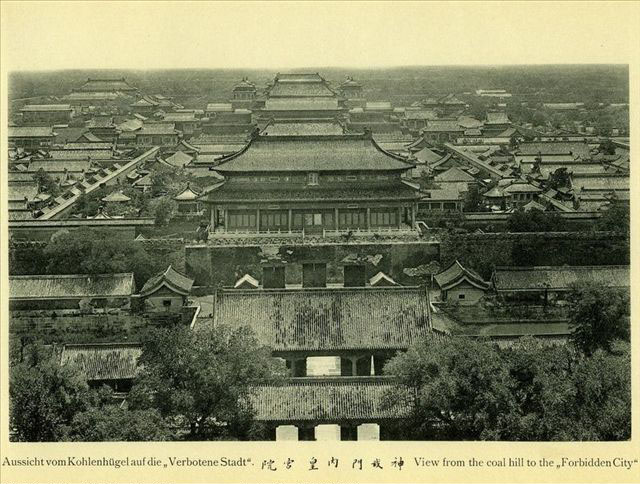
The Forbidden City in 1900.
Source 
The Forbidden City or gugong (故宮)was crowned a UNESCO World Heritage site as it is considered the best preserved set of wooden structures in the world. It served as the imperial palace for emperors beginning in the Ming Dynasty until the end of the Qing Era, the last of China's dynasty periods. Construction began on the Forbidden City in 1406 under the charge of the Yongle Emperor Zhu Di, and it was completed in 1420. The city is about 180 acres and includes nearly 1,000 buildings.

As the Forbidden City is one of the most popular tourist attractions in Beijing—if not China—the area was completely crowded on the summer weekend my class visited. In addition, several local visitors wanted to take pictures of us. It was almost like we were a free attraction, especially for the family that had their hands in my braids at the entrance—strangely amusing!

Despite the occasional unwanted attention, I was happy to visit the Forbidden City as it is so well preserved. However, our class schedule was tight and we were only given two hours to explore, not nearly enough time to see everything. At least, I think a person would need half a day to thoroughly enjoy the Forbidden City. 

參觀故宮


2011年的故宮
大家知道,故宮(也叫紫禁城)是在北京最有名的名勝古跡之一。我和我同學一起去故宮,是一日遊(我們先去了天安們廣場)。夏天的時候,是很熱鬧的地方,人太多。也有很多想拍我的照片的人。按我的經驗在北京沒有辦法避免那种人。

1900年的故宮
Source 
固然故宮是很漂亮的地方,不過對我一點難享受因為人很多,所以看每座大廳不太方便。只要忍耐就行了哈哈。

我們班只有了兩個小時在故宮,時間太少了,沒辦法什麼都看到。最多我之看到差不多三分之一故宮。參觀每地方在故宮裡需要四個鐘頭多,我覺得。

2015-09-12

Hiking on Diamond Head

The view of Waikiki from Diamond Head's summit.
Climbing one of the steep
staircases.
Diamond Head—known as Lēʻahi in Hawaiian—is a prominent volcanic crater or tuff cone on O'ahu. The crater is part of a series of volcanic forms collectively known as the Honolulu Volcanic Series. Diamond Head is a well-known tourist attraction, especially because of its close proximity to Waikiki. The surrounding park and crater are open to the public between 6am and 6pm; however, visitors are prohibited from hiking Diamond Head after 4:30pm.

Although Diamond Head is steep (762ft), the hike is on the easier side, and one could make it both ways in under two hours. Nonetheless, the path is uneven at several points, and the stairs running up the crater are somewhat steep. If you're on the athletic side, you could definitely make the round trip to and from the crater summit in under 90 minutes. I imagine experienced hikers might think Diamond Head is a piece of cake. However, if you have an injury or disability, I'd take it easy. Additionally, I would advise those with small children to hold their hands at all times. It's easy for little feet to slip and fall at Diamond Head, and it's somewhat crowded, you don't want your little angels to get lost in the rush! Lastly, I suggest you bring a bottle of water with you and wear sports clothes; you're likely to get a workout!