|
| My photograph of the Forbidden City in 2011. |
 |
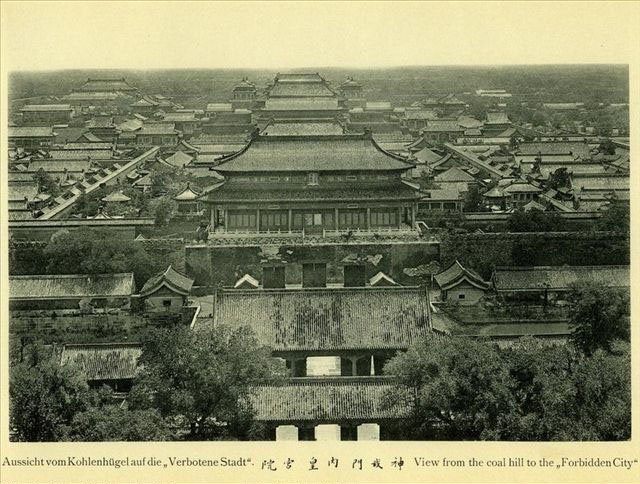
| The Forbidden City in 1900. Source |
The Forbidden City or gugong (故宮)was crowned a UNESCO World Heritage site as it is considered the best preserved set of wooden structures in the world. It served as the imperial palace for emperors beginning in the Ming Dynasty until the end of the Qing Era, the last of China's dynasty periods. Construction began on the Forbidden City in 1406 under the charge of the Yongle Emperor Zhu Di, and it was completed in 1420. The city is about 180 acres and includes nearly 1,000 buildings.
As the Forbidden City is one of the most popular tourist attractions in Beijing—if not China—the area was completely crowded on the summer weekend my class visited. In addition, several local visitors wanted to take pictures of us. It was almost like we were a free attraction, especially for the family that had their hands in my braids at the entrance—strangely amusing!
Despite the occasional unwanted attention, I was happy to visit the Forbidden City as it is so well preserved. However, our class schedule was tight and we were only given two hours to explore, not nearly enough time to see everything. At least, I think a person would need half a day to thoroughly enjoy the Forbidden City.