Showing posts with label tips. Show all posts

2015-09-22

5 More Ways I Saved Money in Tokyo


The five Tokyo money saving tips in this post are related to site-seeing, food, and shopping. For advice regarding accommodations and transportation, please see the aforementioned article. 

Site-seeing

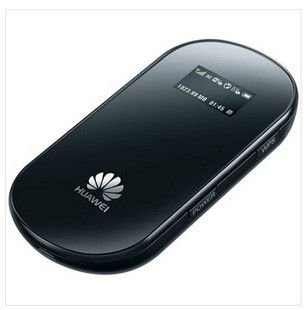
1. Rent a portable wi-fi device or prepaid SIM card

A portable wi-fi device.
Source
If you don't have a phone plan or SIM card that is usable overseas, you will definitely benefit from renting a portable wi-fi device or prepaid SIM card. Naturally, every train station in Tokyo has a detailed map of the area, and there are guide maps in most major neighborhoods; however, you do not want to rely on these when you have a long walk and need to reference a map with your location in realtime. Having stable Internet access while on the go will also allow you to track train or bus arrival times.

I went the portable wi-fi route. There are many companies to choose from when renting a device, and after reading several reviews online, I chose Japan Wireless. Admittedly, I was a little put off by their 1998-style website design, but their service was top notch, and if I ever have the need in the future, I would use them again. I requested that my device be sent to my accommodations before my arrival, so it was waiting for me my first day in Tokyo. It came with a nifty portable charger so I was able to charge the device and my phone while I was out and about. Conveniently, I simply had to place the device in a pre-addressed, prepaid envelope sent with my initial package and drop it in the mailbox at the airport in order to return it!

2015-09-19

4 Ways I Study Chinese

Yes, during language study sessions,
I sometimes have this many books open!
Source
Here's some sage advice regarding language learning:

"If you don't use it, you'll lose it."

I see you rolling your eyes, but believe me, it's true! It's why I can't speak a lick of Spanish anymore!

I do language study one to three hours a day. Sometimes more. Often it involves hitting the books, but sometimes it might be reading comics, watching a drama without subs, or listening to a radio show. 

At the moment, I'm focusing on studying two languages: Mandarin and Japanese; my skills in each language are quite far apart. 

Beginner. Intermediate-advanced. Business level. Those are some of the many levels and labels people use to describe a person's language ability. I don't know which I'd use for myself. For expediency, I'd say my Chinese is a Business/Intermediate-Advanced level and my Japanese is solidly Beginner. 

While my Chinese vocabulary is large and I can respond without thinking much, my tones (I'm tone deaf) are not the best. I can read Chinese subtitles almost as fast as English ones, but always run into a character I don't recognize. I can write slowly, but still make grammar mistakes. I feel comfortable saying I have advanced listening skills, and writing characters isn't much of an issue for me.

I'd also say my Japanese listening skills have passed beginner level and are somewhere in the lower-intermediate category; I can listen to a 1-hour radio show and comprehend 50-60% of the content most of the time. My reading is nearly intermediate as well as I recognize several kanji without having to study them, and have at least the main On-yomi readings down up to mid-level proficency or N3 (thanks Chinese!). I'm working on solidifying Kun-yomi and On-yomi derived from Chinese dialects. But my writing isn't great at all because I'm just starting to study grammar rules (which are way more extensive than Chinese), and I'm still building my speaking confidence.

Anyhow, this post will focus on four of the several methods I'm currently using to improve my Chinese and maintain the skills I have. I think if you're just beginning to learn Chinese, these are things you can do in the now so you don't fall behind later. Keep in mind that I'm not a Chinese teacher (pahaha, faaaaar from it). These are simply things I do to study, and what I've noticed since I started studying Chinese in 2008.

This is the first part of a language learning series on my blog. In the future, I'd like to share more Chinese study methods, and elaborate on my progress in Japanese, especially how Chinese has helped.

2015-08-25

5 Ways I Saved Money in Tokyo

Japanese yen
Source
Whether with a touch of fascination or an edge of skepticism, people often ask how I managed to visit Tokyo and do nearly everything I wanted without returning from my vacation with an empty bank account. I understand their sentiments. Tokyo is commonly crowned as one of the most expensive cities in the world. However, I believe this is only a cause of concern if you live in Tokyo. As a visitor, I found Tokyo to be rather inexpensive, especially since the yen is experiencing a decline. For Americans, now is the best time to travel to Japan (as I type this post, $1 equals 119 yen). Nevertheless, no matter where you're from or what the exchange rate is, if you plan your trip to Tokyo carefully and implement simple money-saving techniques you will be surprised how cheaply you can enjoy one of the most popular cities in the world.

Honestly, if you want to travel anywhere, you have to set your priorities straight. I worked three part-time jobs and didn't over spend on luxuries for three months before I traveled. Oftentimes, when people think they "cannot" travel because it's "expensive", they fail to see how much money they're spending on unimportant things. For example, nixing fast food from your daily life saves tons. But I digress.

I feel it's important to note that I present these tips as a low maintenance traveler not a comfort-seeking tourist. In other words, I focus on the sites and immerse myself in my surroundings when I travel; I prioritize these things over comfort.